Provenance and Transparency
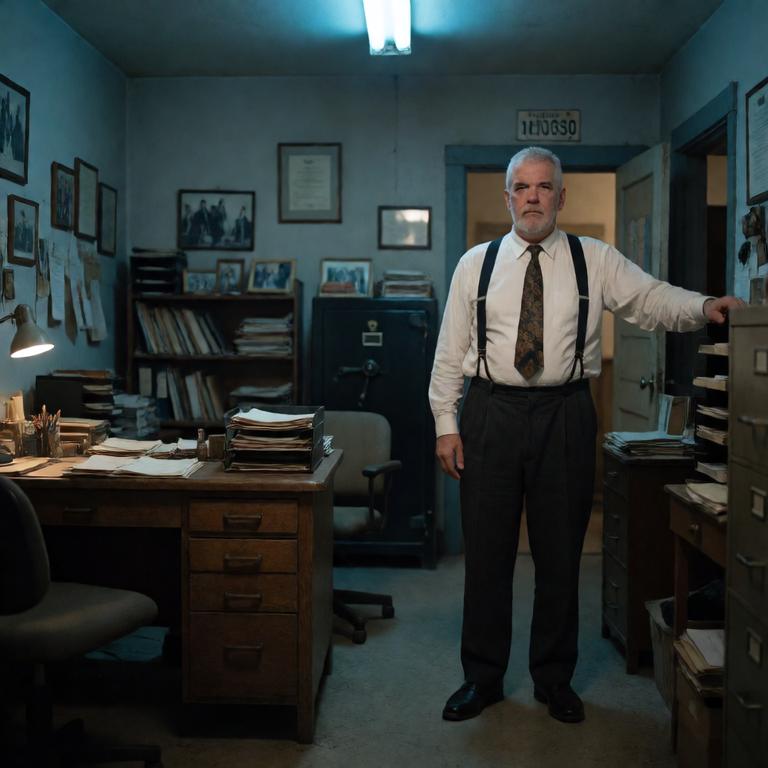
Every image in the series Face & Fiction is made locally on my own computer. So that it stays traceable how an image came about, a self-built tool documents every single file – automatically, completely, and without altering the original.
- The images are AI-generated. They are made with a local image model and my own LoRA, which I trained on photographs of my own face.
- The tool TIMO PROVENANCE is something I developed myself. I used AI assistance while programming it.
- From me come the concept, image ideas, prompts, selection and context. The AI is a tool, not the author.
The process – locally on my computer
No image is made in the cloud. Models, prompts and results stay on my own computer; generation happens offline.
- My own face as source material. The basis is photographs of my face. From them I trained a LoRA – a small add-on file (
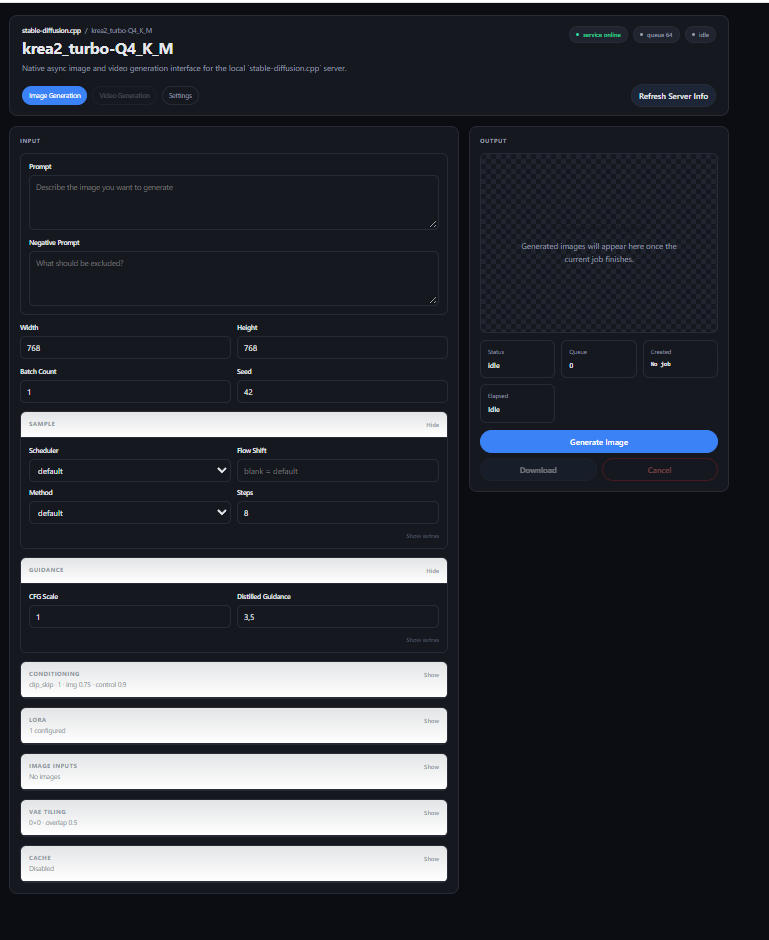
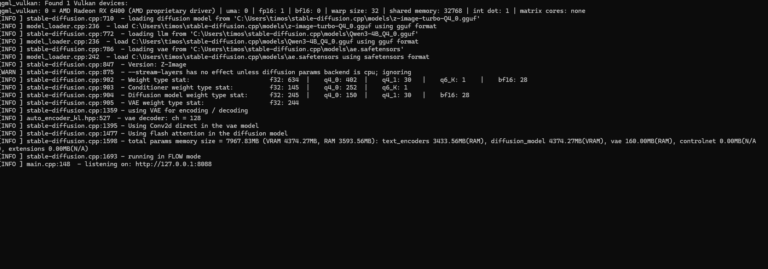
kreaneuer) that teaches a large image model what I look like, without changing the model itself. - The base model. As the image model I use Krea2 Turbo, as text encoder Qwen3-VL-4B and as VAE Wan2.1. All models are in compressed form (GGUF, Q4_K_M) so they run on ordinary hardware.
- The software. Images are computed with
stable-diffusion.cpp, a lean open-source implementation, via the Vulkan interface on an AMD Radeon RX 6400 with 4 GB of video memory. A deliberately modest setup: no data centre, no subscription. - The prompt. Every image begins with a text I write myself – a scene, a light, a time, a visual language. The LoRA places my face into this fiction (strength 1.0).
- Generation. In 8 steps an image of 768 × 768 pixels is produced. The seed fixes the randomness: same seed, same parameters, same image.
- Selection and repetition. Many variants are made; only a few remain. Selecting, discarding and repeatedly rewriting the prompts are the actual artistic part of the work.
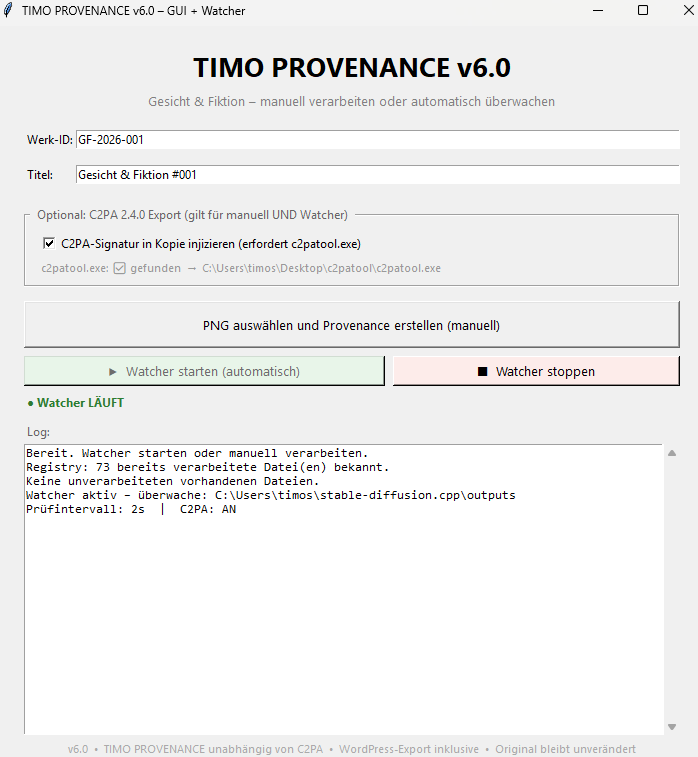
- Documentation. As soon as an image is saved, TIMO PROVENANCE automatically records all the data of this process.
I have been working on this series since 2024, at first with other image models. The tool has changed; the question has not.
What is documented
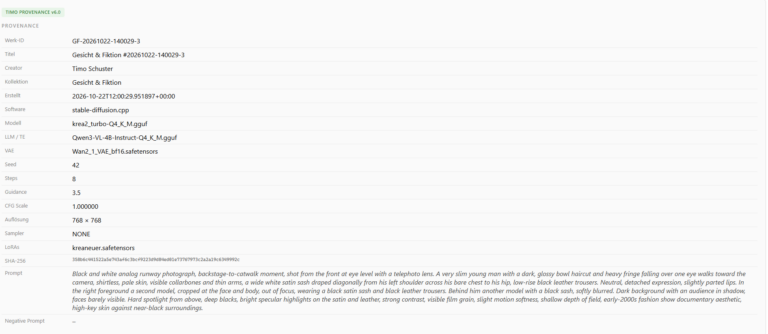
| Work ID & title | unique identifier, e.g. GF-20261022-140029-3 |
| Creator & collection | Timo Schuster · Face & Fiction |
| Timestamp | creation time in UTC (ISO 8601) |
| Software | stable-diffusion.cpp (local, offline) |
| Model, text encoder, VAE | Krea2 Turbo · Qwen3-VL-4B · Wan2.1 VAE |
| LoRA | kreaneuer – own training on my face |
| Parameters | Seed, steps, guidance, CFG, sampler, resolution |
| Prompt | full prompt and negative prompt |
| Fingerprint | SHA-256 hash of the original file |
| Signature (optional) | C2PA manifest (Content Credentials) in a signed copy |
How it works
- A watcher monitors the output folder of the image generator. Every new PNG file is detected and processed only once.
- The embedded generation data is read out and combined with work ID, title and timestamp.
- A SHA-256 hash of the original file is calculated and stored in
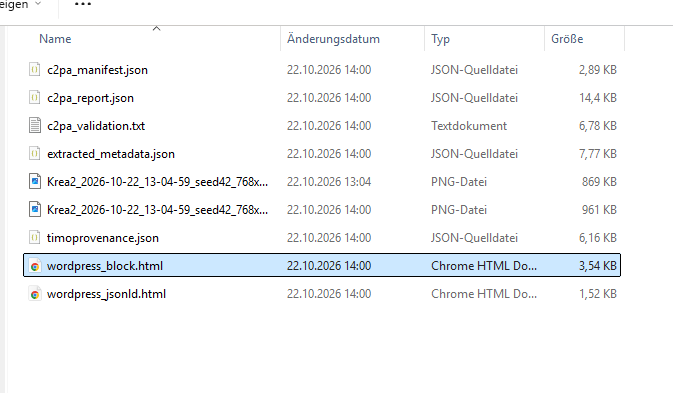
timoprovenance.json. - Optionally, a copy is signed according to the C2PA standard. The original remains unchanged.
- For the website, a readable provenance block and structured data (JSON-LD) are produced.
Why
Since 2024 I have been working with AI image models and my own face. The series asks what a portrait still bears witness to when it no longer needs a camera. That is precisely why I want to disclose how each image was made: which model, which parameters, which prompt. The fiction lies in the image – not in its origin.
Check it yourself
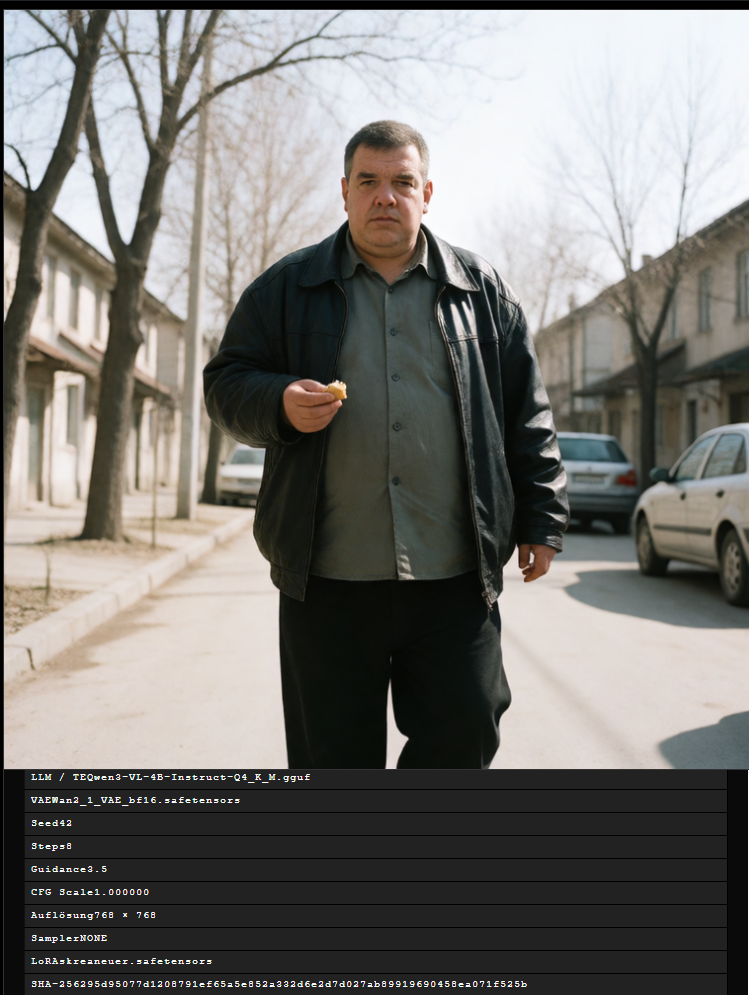
The SHA-256 value below each image can be compared with the original file (Windows: certutil -hashfile file.png SHA256, macOS/Linux: shasum -a 256 file.png). Signed copies can be checked with a C2PA-capable verification tool such as contentcredentials.org/verify .
TIMO PROVENANCE v6.0 · self-developed with AI assistance · as of October 2026